

Power BI Collaboration: Herding Cats or GitHub Fix?
power bi keeps showing up in the background of every conversation about data because it does something most tools struggle with: it doesn’t just help you look at numbers, it helps people work together around them. the reports, the dashboards, the visuals—those are great, but the real power is how easily a team can gather around the same set of insights without fighting through email attachments or version chaos.
you start with data from wherever it lives, pull it into power bi, shape it, build something that actually makes sense. but the magic happens the moment you hit share. suddenly the report isn’t just yours; it becomes something the whole team can poke at, question, filter, and react to. in the service, everything lives in the cloud, so no one needs to hunt for the right file or worry about sending the wrong version. everything updates in place. everyone sees the latest truth.
workspaces add another layer, turning what used to be a solo project into a team studio. people can jump in, adjust a visual, tune the model, add a new page, leave a comment. conversations happen right inside the report, not in a disconnected chat somewhere else. and when teams use microsoft teams, the whole thing slides right into their workflow—reports sitting in channels, updates appearing inline, discussions happening around the actual data instead of vague descriptions of it.
sharing becomes less about permission buttons and more about keeping everyone aligned. you can send something directly to a colleague, publish it to an app so an entire department gets it at once, or embed it where people already work. the mobile app picks it up so decisions don’t wait until someone returns to their desk. and because everything is tied together—datasets, dataflows, models—teams don’t have to rebuild the same pieces over and over. they build once, reuse often, and stay consistent.


Power BI: Collaborate on Reports & Dashboards with Sharing
Power BI stands as a pivotal tool in modern business intelligence, transforming raw data into actionable insights. Its robust capabilities empower organizations to visualize data, analyze trends, and make informed decisions. One of the most significant advantages of Power BI is its collaborative features, enabling teams to collaborate and share seamlessly on reports and dashboards. This article delves into the importance of collaboration in Power BI, exploring how sharing functionalities enhance teamwork and improve organizational outcomes.
Understanding Power BI and its Features
Overview of Power BI
Power BI, a product of Microsoft, is a suite of business intelligence tools designed to analyze data and share insights. It allows users to connect to various data sources, transform data, and create interactive reports and dashboards. With Power BI Desktop, professionals can build complex data models, while the Power BI service enables sharing and collaboration in the cloud. Using Power BI, organizations can foster a data-driven culture, making it easier for everyone to understand performance metrics and identify opportunities for improvement.
Key Features of Power BI
The features of Power BI are extensive, designed to meet diverse business needs. Several capabilities stand out, including:
- Data connectivity, allowing Power BI to access data from various sources.
- Data transformation, enabling users to clean and reshape data.
Visualization capabilities are at the heart of Power BI, with a wide array of charts and graphs available to present data effectively. The dashboard feature consolidates reports into a single, comprehensive view, while natural language querying lets users ask questions in plain language. Power BI also integrates seamlessly with other Microsoft products like Excel and Microsoft Teams, enhancing its versatility.
Importance of Collaboration in Power BI
Collaboration in Power BI is crucial for several reasons. Sharing and collaboration enable teams to combine their expertise, leading to more comprehensive and accurate insights. Power BI reports and dashboards can be easily shared, fostering a collaborative environment where everyone can contribute to data analysis. With collaborative features like workspaces, teams can work together in real-time, enhancing productivity and decision-making. Sharing insights becomes simple, ensuring that all stakeholders are informed and aligned. Overall, collaboration with Power BI transforms how organizations use data to drive success.
Collaboration with Power BI
Ways to Share Power BI Reports
Sharing Power BI reports and dashboards can be achieved through several methods, each designed for different collaboration scenarios. These methods include:
- Direct sharing, which grants access to specific individuals or groups for viewing and interacting with the content.
- Publishing to the Power BI service, making reports accessible via web browsers or the Power BI app.
Embedding reports in websites or applications provides another option, offering a seamless integration of business intelligence into existing workflows. Power BI Pro licenses enhance sharing capabilities, allowing users to share and collaborate more effectively within workspaces.
Collaborative Features in Power BI
Power BI provides several collaborative features to boost teamwork and efficiency. It achieves this through elements like Power BI's built-in collaboration tools.
- Workspaces, which are dedicated environments where teams can work together on reports and dashboards, enabling real-time collaboration.
- Commenting features that let users share feedback and discuss insights right in the reports themselves.
Furthermore, Power BI uses dataflows to allow reusable data transformation logic to be created, improving consistency and efficiency across different reports. Its integration with Microsoft Teams also helps communication and collaboration by allowing teams to discuss Power BI dashboards and reports within their usual communication channels.
Best Practices for Collaborative Reporting
To maximize the benefits of collaboration within Power BI, it's essential to follow best practices. Establish clear roles and responsibilities within the team to ensure accountability. Use workspaces effectively to organize and manage shared content. Implement version control to track changes and maintain data integrity. Encourage regular communication and feedback to foster a collaborative environment within Power BI. Promote the use of dataflows and shared datasets to ensure consistency and reduce redundancy. By adhering to these best practices, organizations can fully leverage Power BI's collaborative features to drive better decision-making and achieve business success. By using power effectively and allowing teams to collaborate, Power BI allows for the best insights and better data-driven decisions.
Sharing Options in Power BI
Sharing Reports and Dashboards
Power BI offers several avenues for sharing reports and dashboards, each designed to accommodate different collaboration needs and security levels. You can directly share a report or dashboard with specific individuals or groups within your organization, granting them view or edit permissions. Publishing to the Power BI service allows you to create apps or embed reports in websites or applications, providing wider access while maintaining control over who can view the data. The Power BI mobile app makes it easy to use Power BI on any device, enhancing collaboration on the go. Power BI Pro licenses often enhance sharing capabilities, enabling more robust collaboration within workspaces.
Using Microsoft Teams for Collaboration
Microsoft Teams integration significantly enhances collaboration with Power BI, enabling teams to discuss and share Power BI reports and dashboards within their familiar communication environment. You can embed Power BI reports directly into Teams channels, allowing users to view and interact with data without leaving the Teams interface. This integration streamlines the workflow, making it easier to share insights, provide feedback, and make data-driven decisions collaboratively. Using Microsoft Teams with Power BI fosters a more connected and efficient collaborative experience. The ability to use Power BI within the Microsoft Teams ecosystem enhances collaboration efforts.
Enhancing Collaboration with Power BI Service
The Power BI service is a central hub for sharing and collaboration in Power BI. Workspaces within the Power BI service provide dedicated environments for teams to collaborate in real-time on reports and dashboards. Sharing and collaboration in Power BI enables users to publish reports, create dashboards, and share insights with colleagues, fostering a data-driven culture. Features of Power BI such as commenting allow users to provide feedback and discuss findings directly within the reports. Sharing and collaboration in Power BI promotes transparency and ensures that all stakeholders are aligned on key metrics and insights. Power BI's sharing capabilities make it easy to share insights.
Using Workspaces for Collaboration
Creating and Managing Workspaces
Workspaces are fundamental to effective collaboration in Power BI, providing a dedicated environment where teams can collaborate on Power BI reports and dashboards. Creating a workspace is straightforward within the Power BI service, allowing you to define access permissions and roles for team members. Managing workspaces involves organizing reports, dashboards, and datasets effectively, ensuring that all resources are easily accessible and well-maintained. Implementing clear naming conventions and folder structures within the workspace enhances discoverability and streamlines the collaborative process. Power BI allows administrators to control who can view and edit content, ensuring data security and compliance.
Collaborating Within Teams
Collaboration within teams using Power BI workspaces enhances productivity and fosters a data-driven culture. Team members can share reports and dashboards, provide feedback through commenting features, and work together in real-time to refine analyses. Using Microsoft Teams integration further streamlines communication, allowing teams to discuss Power BI reports and dashboards within their familiar environment. Assigning clear roles and responsibilities within the team ensures accountability and promotes efficient collaboration. By leveraging the power of workspaces, teams can combine their expertise to generate more comprehensive insights and make better-informed decisions. Sharing and collaboration within Power BI are essential for maximizing team effectiveness.
Optimizing Workspaces for Sharing and Collaboration
To maximize the benefits of sharing and collaboration in Power BI, it’s essential to optimize workspaces effectively. Implement best practices for organizing content, such as using folders and clear naming conventions, to enhance discoverability. Encourage the use of shared datasets and dataflows to promote consistency and reduce redundancy across reports. Regularly review and update workspace permissions to ensure that only authorized users have access. Foster a collaborative environment by encouraging team members to provide feedback and share insights on Power BI dashboards. By optimizing workspaces for sharing and collaboration in Power BI, organizations can unlock the full potential of their data and drive better business outcomes.
Conclusion
Recap of Power BI Collaboration Features
Power BI offers a rich set of collaborative features that enable teams to work together seamlessly on reports and dashboards. From direct sharing to workspaces and Microsoft Teams integration, Power BI provides multiple ways to share reports and insights. Collaborative features such as commenting, dataflows, and real-time collaboration enhance teamwork and productivity. Power BI reports and dashboards make it easy for teams to communicate, share data, and generate collaborative intelligence to the stakeholders. By leveraging the capabilities of Power BI, organizations can foster a data-driven culture and improve decision-making across the board.
Future of Sharing and Collaboration in Business Intelligence
The future of sharing and collaboration in business intelligence is rapidly evolving, with Power BI Pro or Premium at the forefront of innovation. As technology advances, we can expect to see even more seamless integration with other platforms, enhanced real-time collaboration capabilities, and AI-powered features that automate insights and recommendations. The ability to collaborate on data and leverage collaborative features will become increasingly important as organizations seek to harness the full potential of their data within Power BI. Power BI will continue to play a crucial role in enabling teams to collaborate effectively and drive better business outcomes using Power BI's built-in features.
Final Thoughts on Power BI Reports and Dashboards
Power BI has transformed the landscape of business intelligence, empowering organizations to visualize data, analyze trends, and make informed decisions. Its collaborative features have revolutionized how teams work together, enabling them to combine their expertise and generate more comprehensive insights. Sharing and collaboration in Power BI have become essential for driving a data-driven culture and achieving business success. As organizations continue to embrace Power BI, they can unlock the full potential of their data and transform their business operations by learning how to share Power BI dashboards and reports effectively.
Summary
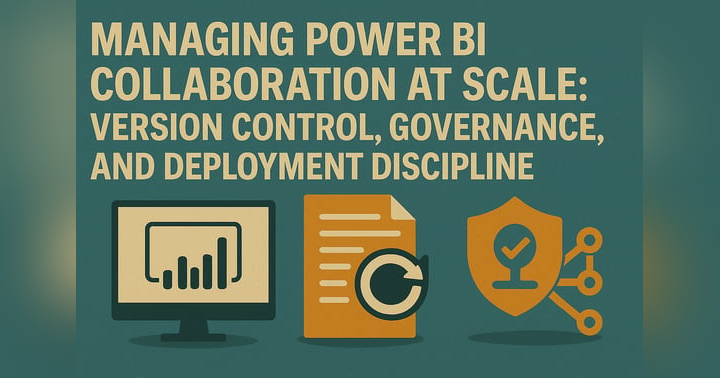
Trying to tame collaboration in Power BI often feels like herding cats — multiple team members editing the same model, merging conflicts, and unclear histories. In this episode, I dig into how Power BI Collaboration: Herding Cats or GitHub Fix? can move your team from chaos to control.
We’ll walk through how PBIP (Power BI Project files) breaks your binary PBIX into text files so you can use Git, why visibility alone doesn’t fix bad practices, and how pull requests, automated checks, and deployment pipelines form the scaffolding you need. This is about more than tools — it’s about creating guardrails, workflows, and automation that let collaboration scale without breaking your model.
By the end, you’ll see how collaboration in Power BI can shift from “everyone edits live” to a disciplined, auditable, and reliable process.
What You’ll Learn
* Why PBIP (Power BI as text files) is the door to collaboration, not the solution itself
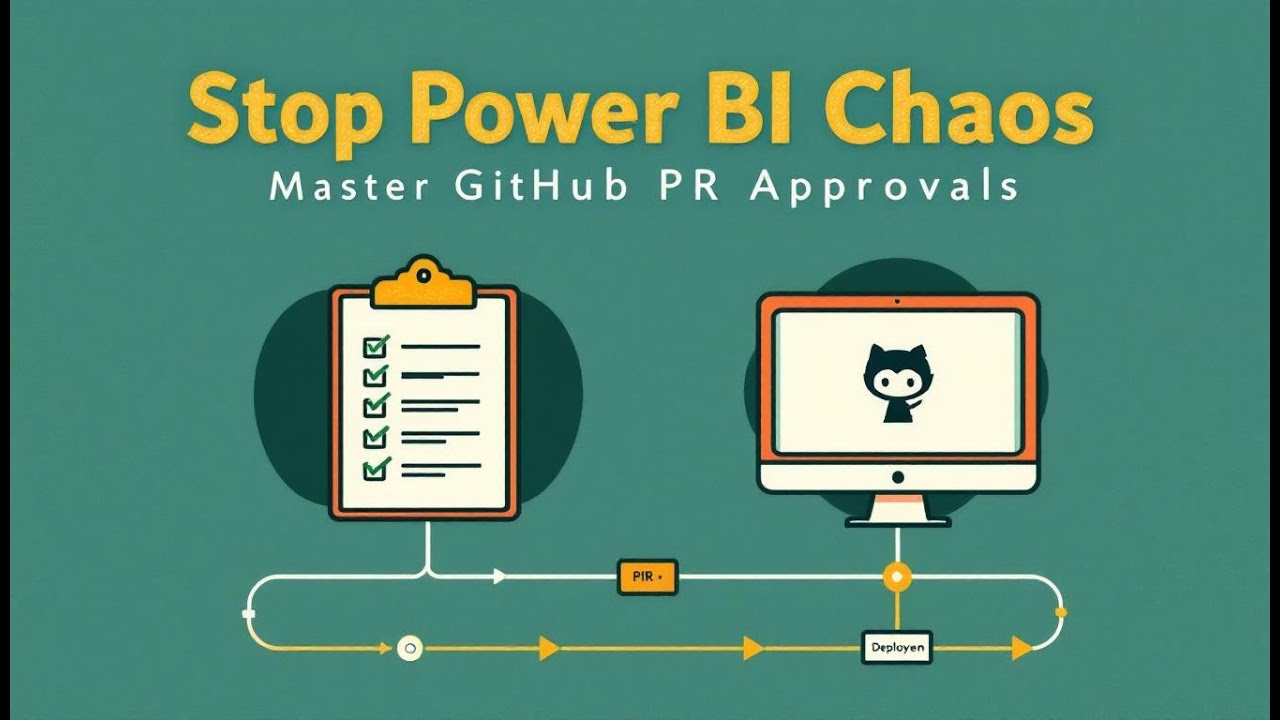
* How pull requests (PRs) act as the gatekeepers for changes in Power BI models
* The role of automated checks (GitHub Actions, script validators) in catching errors before human review
* How deployment pipelines move your changes through DEV → TEST → PROD reliably
* The pitfalls of service principals, workspace permissions, and item limits
* Best practices for balancing automation and human oversight
Full Transcript
Here’s my challenge to you: can your BI team trace every change in reports from dev to production, with approvals logged and automation carrying the load?
Quick checkpoint before we dive in—this session assumes you already know PBIP basics and Git terms like branch, commit, and pull request.
Here’s the roadmap: we’ll cover GitHub PR approvals, automated checks with Actions, and deployment pipelines for Power BI. These three make the difference between hoping things don’t break and actually knowing they won’t.
But first, let’s be real—PBIP isn’t the magic cure you might think it is.
Why PBIP Isn’t the Miracle Cure
The shiny new reality with Power BI Desktop Projects (.pbip) is that everything looks cleaner the moment you flip over. Instead of stuffing an entire report, model, and connections into one bulky PBIX “black box,” PBIP lays it all out as a structured folder full of text files. The semantic model gets its own model.bim file, which isn’t just readable—it also plugs straight into tools like Tabular Editor. Connections, visuals, and JSON metadata live in separate files. Suddenly Git actually works here: diffs show you exactly what changed, branches let multiple people experiment without tripping over each other, and you unlock compatibility with CI/CD tooling like GitHub Actions or Azure DevOps.
That’s the good part—the technical unlock. The bad part is that PBIP doesn’t magically fix team dynamics. All it really does is shine a flashlight on the chaos you already had. With PBIX, every edit lived silently in a single binary file that no one could properly track. With PBIP, those same edits are now scattered across dozens of little files shouting for attention in Git. Yes, merge conflicts are visible. Yes, you can finally see which measure got changed. But if five people hammer away at the same dataset on Monday morning, Git still lights up red. The difference is that now you get to argue about it file by file instead of pretending the issue doesn’t exist.
Think of it like swapping your junk drawer for a labeled tool chest. Sure, every screwdriver now has a neat spot. But when half the office reaches for the Phillips head at once, friction doesn’t disappear—it just becomes a little easier to see who grabbed what. That’s what PBIP brings: clarity without discipline.
I’ve worked with teams who went all-in on PBIP expecting it to solve clashing edits. They dropped rules, skipped reviews, and trusted visibility to save them. Within a few sprints the result was an audit trail full of unexplained changes: columns renamed without reason, relationships adjusted without warning, measures rewritten with zero context. Seeing the edits didn’t make them safer—it just made the confusion permanent in Git history.
There’s also the matter of merge conflicts. PBIP makes them loud and clear, sometimes painfully so. Instead of a silent corruption buried in a PBIX, you’re staring at bright red conflict markers in VS Code showing three competing versions of the same DAX measure. Technically, that’s progress. At least you know exactly what broke. But being “louder” doesn’t mean the pain goes away—it just means you can no longer ignore it. Whether that’s a blessing or curse depends on how disciplined your team is about workflow.
And here’s the crux: the real breakthrough isn’t PBIP itself, it’s what PBIP enables. By splitting out reports and models into text-based, version-controllable files, you can finally layer proper Git workflows on top—branches, pull requests, reviews, CI/CD pipelines. PBIP is the door, not the destination. It gives you per-component version control, but it doesn’t tell the people holding the steering wheel how to drive.
That means the same problems remain if you don’t wrap structure and automation around this setup. Without approvals and reviews, you’re just staring at more visible paw prints from the same herd of cats. Without guardrails like automated checks, you’re still trusting developers not to slip questionable edits straight into production. PBIP makes modern DevOps practices possible in Power BI, but it doesn’t enforce them. That’s still on the team.
So where does that leave us? With clarity but not order. PBIP strips away the monolithic fog of PBIX, but it doesn’t prevent messy collisions. For that, you need controls—something to stop people from overriding each other or sneaking untested changes through. That’s why the next step matters so much. GitHub Pull Requests take the messy stack of PBIP files and put traffic lights on top of them. Instead of five developers racing into the same intersection, you get checks, signals, and a log of who actually did what.
And that’s where the story shifts. Because as useful as PRs are, anyone who’s lived through them knows they can feel like both a lifeline and a choke point. So the obvious question before we dive in is: how do you keep the order they bring without turning every tiny color change into a committee meeting?
PR Approvals: From Chaos to Controlled Mischief
Now let’s talk about the real checkpoint that turns PBIP from organized chaos into something manageable: Pull Request approvals.
Picture five developers all tweaking the same report. One edits DAX, another renames a column, one changes formatting, and two more mess around with colors. If those edits all land unchecked, you don’t get collaboration—you get a Franken-report. That’s why PRs exist. They’re the gatekeeper that slows things just enough to prevent the equivalent of five people merging into the same intersection at once.
Think of PRs as GitHub traffic lights. A green light means merge and move forward. A red light holds you back until reviewers confirm your work won’t smash into something else. Nothing fancy, just structured pauses so you aren’t tearing down each other’s changes by accident.
And yes, approvals do make people nervous. “Won’t this slow us down?” Only if you misuse them. You don’t need senior managers rubber-stamping a color change to a pie chart. But you absolutely want more than one set of eyes when someone restructures a dataset schema or rewires relationships in a model. So the practical approach is this: map review strictness to impact. A single quick approval is fine for cosmetic or text tweaks. Multi-reviewer gates are required when altering measures, adding calculated columns, or adjusting relationships. That way, day-to-day work stays quick, but the high-stakes stuff doesn’t sneak into production unchecked.
This isn’t just me being cautious. Microsoft’s own branch and workspace guidance treats PR approvals as a control point. They’re the moment when you officially decide a change becomes part of the shared version. Without this step, you’re basically letting people hot-patch whatever they like into the core model. That’s not governance—that’s an incident waiting to happen.
And here’s a tactical win people forget: PRs automatically produce an audit trail. Every commit, comment, and approval gets logged. So the next time someone asks why the revenue report broke last week, you don’t have to sift through local files like a detective. You just check the PR history—who approved it, what was discussed, and which changes were included. That trail is worth its weight in overtime hours saved.
Bottom line: PR approvals aren’t about bureaucracy. They’re about balance. Too loose and you invite chaos. Too strict and you’ll stall over trivial edits. The sweet spot is rules that scale—light reviews for low-impact edits, gated approvals for heavy refactors. That keeps the repo secure without burning everyone out.
That said, PRs only catch what reviewers actually pay attention to. Humans get tired, skim over changes, or hit “approve” just to clear the queue. Which means a lot of preventable issues can still slip through. If you’ve ever merged sloppy DAX or a broken relationship because no one caught it during review, you know the pain.
This is where the next shift happens: automating the obvious. Instead of relying strictly on human reviewers to notice formatting gaps, weak naming, or missing descriptions, you let automation scan every PR before approval even hits the table. Humans focus on context. Machines pick up the predictable mistakes.
So the next logical step is simple. PRs bring order. Automation makes that order smarter. And that combination is what keeps your main branch from turning into a landfill of small but costly errors.
Automated Checks: Your Silent Review Team
So here’s the next piece: automated checks, your silent review team. These are the guard dogs that don’t sleep, don’t skim pull requests, and aren’t distracted by Slack. They sit at the repo door and bark whenever something sloppy tries to sneak through.
The mechanic behind it is simple enough: GitHub Actions. Every time you push a commit or open a pull request, Actions spin up and run the scripts you tell them to. Think of them as bouncers with clipboards. New files show up, and instead of waving them into production by default, Actions run a battery of checks—scripts in PowerShell, validation tools, maybe a couple of Node tasks—and only then give a green light. You don’t hit play yourself; they fire automatically on events you define.
Now, the catch: you don’t start by throwing every possible validator into the mix. Do that, and you’ll turn your repo into airport security. Developers will spend more time unzipping their shoes than writing code. The smarter move is to start small. Pick the checks that return the biggest value for the least friction—naming conventions, glaring DAX anti-patterns, obvious schema slips like missing relationships, and maybe some linting on JSON or model files. That way, your developers still feel fast, but you’ve bought yourself some safety rails.
Let’s put some tools on the table. Model.bim is a text file, which means static analysis tools can crawl through it. Tabular Editor can run command-line scripts to validate relationships, naming rules, or calculation groups. PowerShell scripts from the MicrosoftPowerBIMgmt module can query datasets or validate if a workspace is actually alive before you dump changes on it. Combine that with the Power BI REST APIs, and you can even automate smoke tests for updated reports. A validation script can hit those APIs, check metadata or data source bindings, and kick back errors. None of this is hypothetical—it’s what makes PBIP worth adopting in the first place.
A great pattern teams use: set up a GitHub Action on pull request “open” or “update.” That workflow runs a small suite—maybe a PowerShell script to test dataset names, a Node script to catch bad DAX snippets, and a Tabular Editor command-line run to ensure the model doesn’t break basic best practices. If something fails, the Action pushes comments right into the pull request conversation and marks the build red. No merge, no click-through. The developer fixes it before the branch even gets considered.
Here’s why that matters: text diffs don’t warn you about performance problems. You might see a renamed measure or column and think, “Looks fine.” But a validator can catch the fact that someone deleted an index, or changed a filter in a way that turns queries into sludge. One team I worked with had a case like this—a dataset rebuild looked innocent in Git, but a validator flagged a broken relationship before it hit production. That single automated fail saved them hours of firefighting and a couple of angry calls from business users.
Think of automation as the grunt-work filter. Humans hate checking casing rules or scanning for “Sheet1” table names. A script can handle it in milliseconds. The humans still weigh in—but their reviews go to strategic fit, business logic, and design quality instead of whether you capitalized “CustomerID” consistently. Division of labor, pure and simple.
Microsoft’s docs basically nudge you in this direction. GitHub Actions integrate with Power BI services and even Fabric’s APIs, making validation part of your CI/CD story. That’s not overkill; it’s the obvious way forward. Automate repetitive hygiene so developers and reviewers aren’t wasting energy on boring consistency checks.
Bottom line: treat Actions like your bot coworkers. Start with a handful of checks that deliver the most value, then expand as your team matures. Automate model-level sanity checks, schema validation, and naming rules. Leave reviewers free to spend time on design and strategy, not proofreading field names.
And once those checks are in place, the question naturally becomes: if Actions can block bad changes from entering, why not also let them carry good changes forward? That’s where pipelines come in—not just blockades, but automated ways to push approved builds from development through testing and into production without the ritual of manual button-clicks. And that shift changes deployments from superstition to something you can actually trust.
Deployment Pipelines: Reliability Without Prayer
Deployment pipelines are where the whole setup graduates from “nice experiment” to something you can actually run in production without chewing your fingernails down. This is the part that takes your carefully checked code and moves it between environments in an orderly way—DEV, TEST, and finally PROD—without relying on lucky mouse clicks.
Manual publishing in Power BI is the Wild West. Export a PBIX, import it somewhere else, pray you didn’t pick the wrong workspace, and cross your fingers that dataset IDs still line up. It’s like carrying an armload of groceries without a bag. Maybe you make it to the car, maybe the eggs redecorate your driveway. That’s why deployment pipelines exist, and more specifically, the Deployment Pipelines REST APIs. They were built to remove that constant element of chance.
These APIs aren’t just “next stage” buttons. They support several key scenarios that every BI lead should know: *Deploy All* sends an entire workspace forward to the next stage, *Selective Deploy* lets you pick individual items like a report or dataset, and *Backward Deploy* (with `isBackwardDeployment=true`) can promote content back into a previous stage if it’s missing there. On top of that, APIs can also *Update the App* associated with a stage, so when you promote content into TEST or PROD, the linked app can update automatically and users see the refreshed reports right away. That’s real control—without shuffling files around like a desperate intern.
Now, here’s the blunt truth: before any of this works, you need the boring but crucial prerequisites. The caller—whether a human account or a service principal—has to be in Microsoft Entra ID with the right permissions on both the pipeline and the target workspaces. Skip that, and nothing moves. And when you lean on service principals—which you absolutely should for automation—you hit some limits. Service principals cannot configure OAuth for data sources, so certain datasets won’t refresh until a human fixes credentials. Also, a service principal becomes the owner of semantic models and paginated reports it deploys, which can block scheduled refreshes. And forget about dataflows: service principals can’t deploy those at all. One more catch—each deployment call caps at 300 items. If your workspace has exploded into a junkyard of visuals, that ceiling will come for you. These are not “nice to knows”; they’re the potholes you need to acknowledge up front.
So, how do you wire this into GitHub Actions? The smart, battle-tested method is to stash your Azure service principal credentials—client ID and secret—in GitHub repository secrets. That keeps them out of the code and away from accidental commits. Then you map repo folders to pipeline IDs with a YAML configuration file. Each folder aligns to a specific pipeline, and the GitHub Action reads that map to push content to the right place. This isn’t me making something up—this pattern shows up in community actions like *Power BI Pipeline Deploy* on the GitHub Marketplace. It works well, but you should know these marketplace actions are third-party, not “Microsoft certified.” Translation: they’re useful, but you own the risk. If you need maximum security and support, roll your own scripts against the APIs.
Okay, so what does this look like on the ground? You close a pull request, GitHub Actions trigger, call the Deployment Pipelines REST API, and move your content from DEV to TEST. If all your checks pass, the same workflow can promote on to PROD. The cycle is repeatable and auditable: you know exactly what went where, when, and by whose approval. That replaces improvised nightly hope sessions with structure. And if your boss asks “How do we know nothing slipped in untested?” you actually have an answer beyond “trust me.”
Does this mean automation is perfect? No. You’ll still run into cases where manual credential fixes are unavoidable, or where the limits on items and dataflows force you to rethink your structure. But the difference is you’re dealing with occasional, known exceptions, not perpetual chaos. Nine times out of ten, the deploy runs lights-out, and you stop burning weekends chasing missing relationships in PROD.
Bottom line: deployment pipelines plus Actions give you reliability without prayer. Instead of clicking and whispering to the reporting gods, you’ve got a process that carries reports through environments with consistency. You can audit trail it, roll back if needed, and sleep at night knowing nobody fat-fingered a workspace name.
And once you’ve got deployments running this smoothly, the real challenge shifts. It’s no longer “Can we promote safely?” but “How do we layer governance in without turning the whole setup into red tape?” That balance—control without bureaucracy—is what we’ll tackle next.
Governance Without Bureaucracy
Nobody signed up for CI/CD just to feel like they were renewing a car license at the DMV. The goal is speed with safety, not drowning in process charts and paperwork approvals. Traditional governance often forgets that. It tries to improve quality by smothering developers in forms and tickets, and the end result isn’t safer code—it’s frustrated devs sprinting around the guardrails. Governance that actually works is governance that feels like guardrails on a highway: they don’t slow you down, they just make sure your car doesn’t leave the road at 80 miles an hour.
And the practical difference comes from how you set those guardrails. Not every repo needs the same rules. That’s the first tactical fix. For cosmetic changes in a report, you don’t need a council of elders—GitHub can be set to a simple “one thumbs-up and merge it.” But for high‑impact model updates that recalc half your business logic? Tighten the gates with multiple reviewers and make them answer to a PR template that lists exactly what to check. Lightweight where it can be, strict where it must be. Simple math.
This is where PR templates actually earn their keep. A good template calls out business logic, schema dependencies, testing notes—so the reviewer doesn’t have to guess what’s important. Layer that with automated checks chasing the boring stuff, and suddenly your humans are elevated back to human work. Bots chase casing rules, you check if the sales metric still matches finance’s definition. It’s division of labor that keeps pace high without sacrificing quality.
Let’s add automation back into the picture because it’s the linchpin. Your automated checks—whether they’re PowerShell scripts using MicrosoftPowerBIMgmt, Tabular Editor validations, or targeted JSON linting—snag the things no human reviewer should care about. Consistent naming, obvious DAX errors, missing relationships: all flagged before the pull request even gets a green button. That means reviewers’ eyes go exactly where they should—on intent, design, and whether the business will actually trust that report.
And this isn’t just theory. Teams that live in chaos without governance often rediscover sanity by doing exactly this: PR templates, automated validators, and approval levels tuned to the repo. The shift is immediate. Work feels lighter because devs know they won’t get blocked for changing a title, but they can’t bypass scrutiny if they’re reshaping the dataset that drives executive dashboards. Quality stays high, but nobody feels like they’re filling out tax forms to push code.
Now, there’s also the bigger picture: how environments map to branches. Most teams land in one of two supported patterns. Option one: developers create feature workspaces that map directly to feature branches, so each experimental branch has a mirrored sandbox in Power BI Service. Option two: developers make their changes locally in PBIP and sync them to a feature branch without a parallel workspace, letting automation handle the deployment pipeline into shared environments. Both approaches line up with Microsoft’s Fabric CI/CD guidance. The trick is deciding which style matches your team’s appetite for overhead. Either way, it’s still branching plus workspaces; you’re just choosing whether to mirror both.
With those patterns in mind, governance gets even easier to scale. Lightweight approvals for content tweaks in a feature workspace. Heavier reviews and scripted checks for model changes that push into TEST or PROD. The structure is clear: the farther your change goes, the more gatekeeping it deserves. Nobody fights the rules when they actually make sense.
And don’t forget the cultural side. When developers see that bots handle the grunt checks and humans only weigh in where their judgment matters, they stop viewing governance as an obstacle. They respect it, because it filters out noise and keeps them from firefighting in production. Automation does the nagging; humans focus on strategy. That’s what keeps the balance working.
The outcome is a development culture where speed and safety finally align. Every change is traceable, every step through the pipeline is logged, and approvals feel streamlined instead of bureaucratic. Teams move fast and still sleep at night because nothing sneaks into production without a breadcrumb trail.
And while all of this drops the stress of endless approvals, it also shines a light on where the real danger lurks—not in red tape, but in the untraceable changes that slip past everyone and explode later.
Conclusion
So let’s land this with what really matters. Three takeaways you can act on right now: PBIP gives you clean, component-level diffs but it doesn’t solve workflow on its own. Pair PR approvals with automated checks so the obvious mistakes never make it past review. Then wire merges into deployment pipelines using REST APIs or GitHub Actions—just keep in mind the quirks with service principals and item limits.
Do those three things and you’ve got change management on cruise control for Power BI.Subscribe to the podcast and drop a review—I spend hours each day making this for you, and your support would help me a lot.
This is a public episode. If you'd like to discuss this with other subscribers or get access to bonus episodes, visit m365.show/subscribe